Recovery isn’t just not using drugs or alcohol, that’s abstinence. Recovery is something that happens when you begin to get your life back. Recovery is being full of life. Every alcoholic or addict’s disease takes hold differently and at different times. As addicts, we cut ourselves off from those we love to make room for the drug or drink. It becomes our friend, lover, and confidant, our only coping strategy. It is what we turn to when we celebrate, when we mourn, when we are anxious, tired, angry, sad, and happy. Culturally, it’s the symbol of being a grown-up, of “being a man.” It’s advertised as all of the above, but the alcoholic, the addict? We are relegated, or should I say “othered,” into the shadows. We are stigmatized. We are looked at as broken, defective, less than, and unable to handle our liquor. I disagree.
Being in recovery means we are taking our lives back. I’ve heard it said that “We are not giving up something, we are gaining everything.” We are establishing and re-establishing connections. We are re-learning to be in the world again, rebuilding bridges, and learning to trust ourselves. It takes so much courage, more than most can imagine. It takes compassion, for ourselves and others. It requires getting comfortable with vulnerability, our own, and listening to others. And it takes faith, in ourselves, in others, and, some argue, in a higher power. I have always struggled with this idea. I was baptized Episcopalian and raised in the church. I was an acolyte before experimenting with alternative religions. I was in search of that faith that everyone speaks about. The closest I got was when practicing matriarchal, earth-based religions. They were focused on the earth and what it provides. It made sense, but these too were filled with bureaucracy and left a bitter taste in my mouth.
My father began taking me on camping trips before I was a year old. He told me that I learned to walk on a camping trip, running toward the Little River at Elkmont Campground screaming “rushy wawa.” I grew up playing in the forest as much as I played in the neighborhood. I felt at home there. When I was in my early twenties, I had an epiphany. Nature. Nature was the answer. I had been immersed in it my entire life. I understood it to be what it was, not what I wanted it to be. It just is. It is consistent, as well as consistent in its unpredictability. I was comfortable with that. There was no pressure to conform. It was beautiful, miraculous, and awe-inspiring.
I discovered fly fishing in my late twenties. I loved the way it looked, casting your line overhead in tight loops. I loved the fact that it was so much more involved than just throwing a worm on a hook and waiting. But I was drinking then. I was unable to appreciate it fully. I was more concerned that my flask didn’t run out than I was focusing on getting the perfect drift. My best friend and I had a lot of really good days of fishing, don’t get me wrong. I loved it! We went salmon fishing on Great Lakes tributaries, striped bass fishing on the ocean, but mostly trout fishing in the Catskills. When I look back on my early days of fly fishing, I was not connected to nature. It was a hobby, not a passion. I loved being in the water, in nature. I thought it was beautiful, but I was not connected.
When I got sober, I struggled. Having been using since I was 12, I knew no other coping skill. I had to relearn everything. I struggled with the notion of a higher power, of putting my faith in something or someone else. I was still fly fishing, but I was more focused on staying sober. For the first 5 years of my recovery, I worked my program, made connections, developed relationships, and began to trust, both others and myself. I met my wife, got married, and rediscovered nature. I was introducing her to nature. Born and raised in NYC, she had not had much exposure outside of Central Park. We went camping and hiking, and while I was introducing her and her son to nature, I fell in love all over again. I began to see more. Like looking through a child’s eyes, I saw the beauty and sheer awesomeness that was the natural world for the first time all over again.
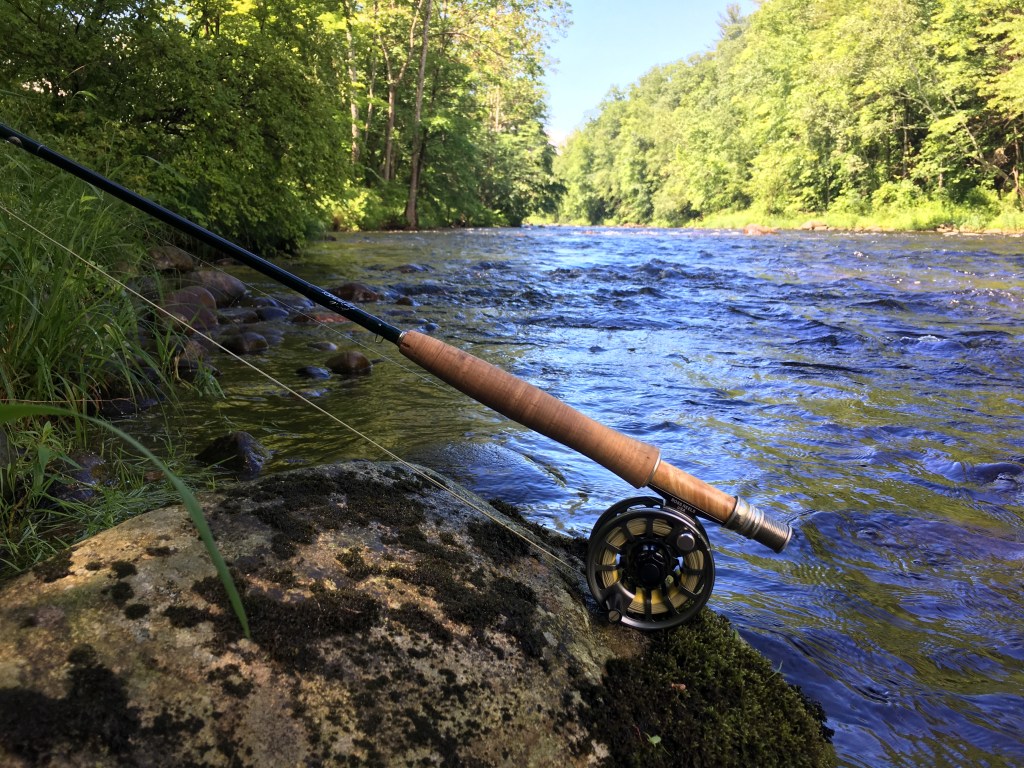
I began fly fishing by myself more often. But even when fishing with my friend, I would just stand there sometimes and watch the river flow by, listening to the water crashing over rocks, the birds chattering as they flew overhead, and the wind in the trees. It was all amazing and beautiful. When I was fishing, all the stress, all the worry just melted away. I was focused on the next drift. I was paying attention to the feeling of the rod in my hand (which improved my casting). I wasn’t thinking about my bills or any of my societal obligations, I was connected to something that just is. There was no pressure. There were no expectations. I could just be me. I felt so tranquil and so whole, like I was a part of nature and it was a part of me. I was strengthening that connection that has always been there. My focus got sharper. I saw more, and in seeing more, I looked for more. I was better able to regulate my emotions and my stress. I learned about mindfulness in social work school, and I applied it here. Fly fishing is one of the most mindful activities you can do. The peaceful focus involved, the care and attention required to fly fish, translated to my being able to provide more care and attention toward myself. I began to get healthier.
Today, any activity in nature is my preferred method of self-care. I love hiking. I really love camping, for 10 days at a time if possible. Being totally immersed in nature for that long changes you, even if only for a little while, but it feels so good. Fy fishing, however… fly fishing is where I am able to really be one with nature. It is where I am able to be at peace. To be a successful fly angler, you need to understand and accept the river for what it is. You fish on its terms. The river will not change for you, you must adapt to it. Acceptance is a skill that every addict and alcoholic must practice if we are to recover. Fly fishing teaches you how to be more accepting. Whether you are catching fish or not, there will always be things to learn. You must keep an open mind. Accepting the river for what it is can be a metaphor for life as well. The river flows on, sometimes at a trickle, sometimes it is overflowing, but it keeps going, on and on and on. If we can adapt to its changes, shift our perspectives, and accept it for what it is, as well as accepting our place in it, we will catch more fish. We will be more in tune with the river, with life, and that is being in recovery.

 The Nature of My Recovery
Leave a comment